
Making the decision to move someone you love to assisted living can bring a mix of emotions. You may feel relieved knowing they’ll have access to the support they need while also wondering how they’ll adjust to leaving a longtime home and beginning life somewhere new.
For families exploring assisted living in Fort Worth, TX, finding the right community is only part of the process. Helping a parent or loved one prepare emotionally and practically for the move can make the transition easier.
Assisted living can provide help with everyday needs while giving older adults opportunities to remain active, build friendships and enjoy greater freedom from household responsibilities. Still, knowing a move is the right choice doesn’t mean it will feel easy at first.
As a family member, you can play an important role in helping your loved one approach the move with greater confidence. Here are six tips for preparing someone you love for the transition to a Fort Worth assisted living community.
1. Include Your Loved One in the Conversation
Whenever possible, make your loved one an active participant in decisions surrounding the move.
According to AARP, involving older adults in research and choosing an assisted living community can make the overall transition smoother. Preferences that may seem small—such as wanting a quieter setting, a particular apartment style or access to certain activities—can be very important to the person who will be living there.
Instead of focusing conversations exclusively on why your loved one needs assistance, talk about what they would like their next chapter to look like. What would make everyday life easier? What activities would they enjoy? What do they hope to gain from the move?
Listen to concerns rather than immediately trying to resolve them. Acknowledge that moving to assisted living is a significant change and give them the time and space to express their feelings, preferences and priorities.
Whenever possible, involve your loved one in the decisions throughout the process. Having choices can help preserve a greater sense of independence and control at a time when many things are changing.
2. Help Them Become Familiar with the Community Before Moving Day
Don’t let moving day be the first time your loved one begins experiencing life in their new community.
If possible, visit several times beforehand. Have lunch or dinner in the dining room. Attend an activity or special event. Walk through the common areas together and introduce your loved one to team members and other residents.
These visits can serve another purpose: replacing uncertainty with familiarity. Your loved one may begin recognizing faces, learning where things are and discovering activities that interest them. Instead of moving into a completely unfamiliar environment, they may arrive remembering the friendly person they met at lunch or looking forward to trying a class they learned about during a visit.
3. Start Downsizing Early—and Let Your Loved One Lead
For many families, downsizing is one of the most challenging parts of preparing for assisted living. A longtime home is filled with more than belongings, it holds memories of holidays, family milestones and everyday moments, which can make deciding what to keep especially emotional.
AARP recommends involving your loved one in decisions about what to keep, give away or discard rather than making those choices for them. It also suggests starting with less-used areas of the home, where possessions may have fewer emotional attachments, and working gradually rather than trying to accomplish everything at once.
Before deciding what will make the move, measure the new residence and determine which furniture will comfortably fit. Then help your loved one select the belongings that are most useful or meaningful to them. Items that won’t make the move can be offered to family members, donated, sold or stored.
Most importantly, allow your loved one to remain in control of the process whenever possible. Choosing which treasured possessions will come with them can help make their new assisted living apartment feel familiar and personal from the start.
4. Make the New Apartment Feel Like Home
Familiar surroundings can provide comfort during a period of significant change.
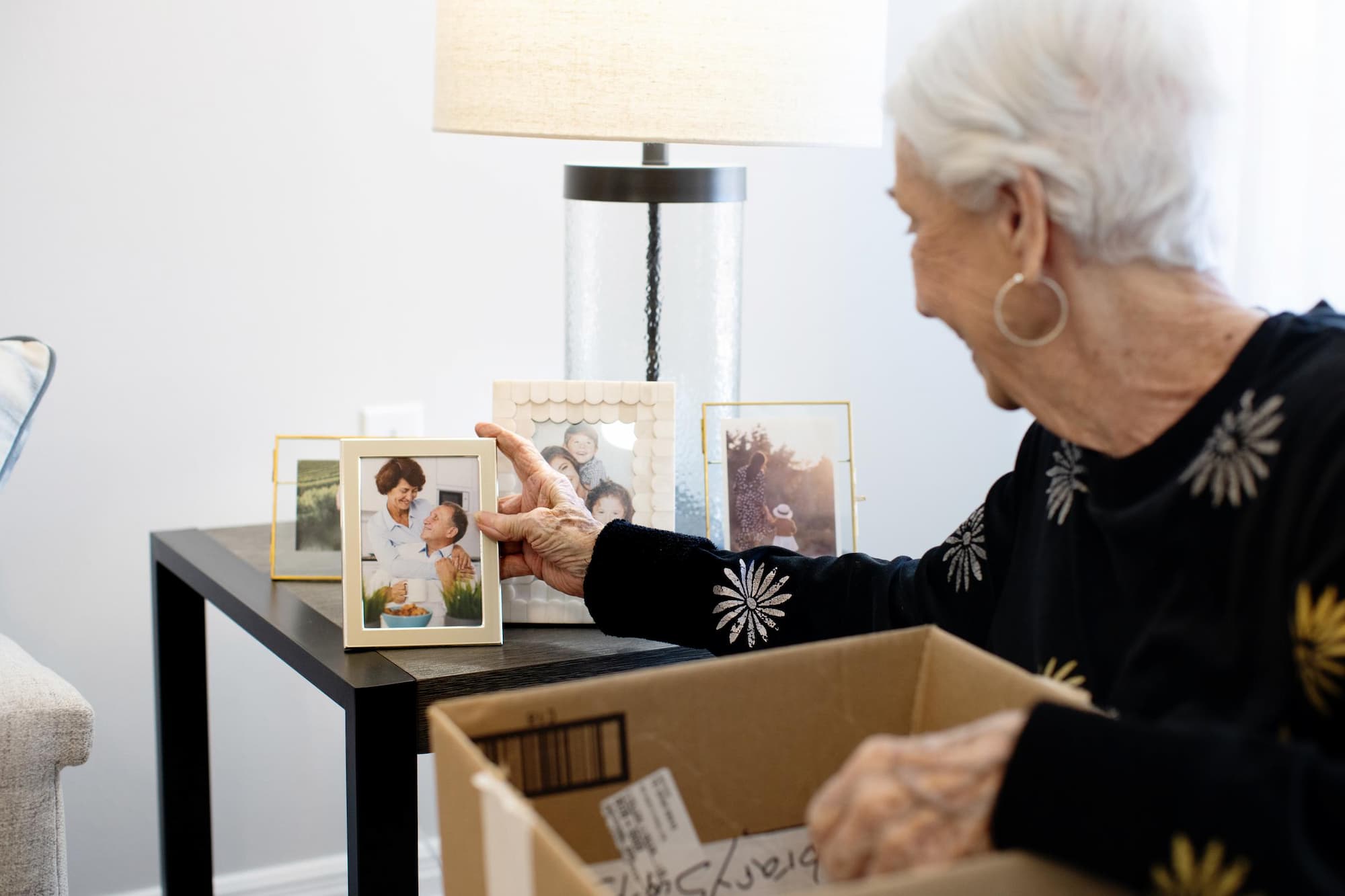
Rather than starting over with an entirely new look, incorporate favorite belongings into the new apartment. Family photographs, artwork, a favorite chair, treasured books, a familiar bedspread and other meaningful possessions can immediately make the space feel more personal.
If possible, have most of the apartment unpacked and organized before your loved one settles in. Set up the television, arrange family photographs and make sure clothing, toiletries, medications and other necessities are easy to find.
When your loved one walks through the door, the goal isn’t for them to see an apartment filled with moving boxes. It’s for them to recognize their home.
5. Share What You Know About Your Loved One
The more the assisted living team knows about your loved one, the better they can personalize their experience, build meaningful connections and help them feel comfortable and at home in their new community.
Share information about your loved one’s background, interests, preferences and daily routines. Are they an early riser? Do they enjoy coffee before breakfast? Were they a teacher, business owner or homemaker? Do they love golf, gardening, music or card games? Are there routines or traditions that are especially important to them?
Also talk about the things that contribute to a good day for your loved one—whether that’s starting the morning slowly, staying physically active, spending time outdoors or enjoying conversation over dinner. These insights can help team members connect them with activities, neighbors and experiences they may enjoy.
While assisted living will naturally introduce some changes, maintaining familiar routines and honoring personal preferences whenever possible can provide a reassuring sense of continuity. When team members understand who your loved one is—not simply what assistance they need, they can provide a more personal experience that helps them feel known, valued and connected.
6. Give Your Loved One Time to Adjust
Moving day isn’t the end of the transition. In many ways, it’s the beginning.
Your loved one may be enthusiastic one day and homesick the next. They may initially hesitate to participate in activities or need encouragement to meet new people. That’s not necessarily a sign that the move was a mistake.
Where You Live Matters notes that adjusting to a new lifestyle can take several months and that it’s normal for an older adult to have good days as well as days when they want to return home.
Stay connected while giving your loved one opportunities to establish their own routines and relationships. Work with the community team to identify activities that match their interests. Encourage family members and friends to visit and call. Ask your loved one about the people they’ve met and the things they’ve enjoyed rather than focusing every conversation on what they miss about their former home.
Over time, unfamiliar faces can become friends, new routines can become comfortable and a new apartment can truly begin to feel like home.
Discover Assisted Living at Broadway Cityview in Fort Worth
Preparing someone you love for assisted living involves much more than packing boxes. It’s about helping them maintain a sense of choice, surrounding them with familiar people and possessions, and giving them the time and support they need to embrace a new chapter.
At Broadway Cityview, assisted living provides personalized support with everyday needs while encouraging residents to continue doing as much as possible for themselves. Just as importantly, residents have opportunities to enjoy engaging programs, connect with others and experience the benefits of a community designed around their needs.
If you’re considering assisted living for someone you love, visiting together can be an important first step. Schedule a tour of Broadway Cityview in Fort Worth and discover how the right support can help your loved one continue living with confidence, connection and purpose.